

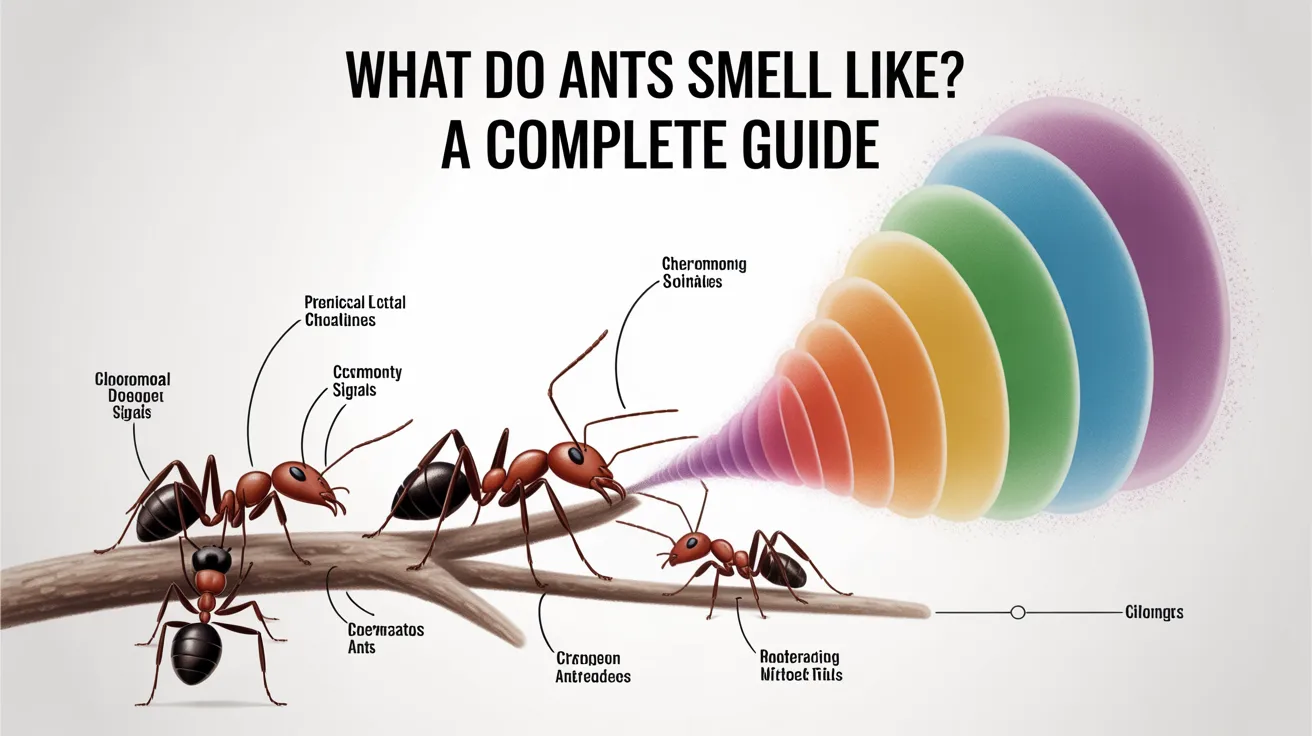
Ants are fascinating little creatures, and their world is full of scents that guide their behavior, communication, and survival. But have you ever wondered what ants actually smell like? This guide explores the answer in a detailed, practical way.
Understanding Ants and Their Sense of Smell
Ants rely heavily on their sense of smell. Unlike humans, they don’t use vision as their primary sense—they navigate, find food, and communicate mostly through chemical signals called pheromones.
- Pheromones: These are chemical scents ants release to signal danger, mark trails, or indicate food sources.
- Scent glands: Ants have specialized glands that produce these chemicals, like the poison gland, Dufour’s gland, and scent gland in the abdomen.
Because of these chemicals, ants themselves have a subtle but noticeable odor, often described as:
- Musty or earthy: Similar to damp soil or leaves.
- Sweet or citrusy: Some species, like the odorous house ant, smell sweet or even like rotten coconut when crushed.
- Pungent or sour: Carpenter ants can emit a sharp, acidic scent as a defense mechanism.
Why Ants Smell the Way They Do
The smell of ants is not just a random feature—it serves important purposes:
- Communication: Ants leave scented trails to guide others to food or away from danger.
- Defense: Some ants release strong-smelling chemicals to ward off predators.
- Colony recognition: The scent helps ants recognize members of their colony.
Visual and Sensory Cues of Ants
If you’re trying to detect ants by smell or sight, here are some clues:
- Clusters near food sources: Ants are often around sugary or greasy foods.
- Small trails: Followable lines of ants are often marked with pheromone trails.
- Crushed ants: Gently squashing one ant can release a distinct odor, which varies by species.
- Odorous house ants → sweet or rotten coconut smell
- Carpenter ants → pungent, musty smell
Where Ants Can Be Found or Live
Ants are extremely adaptable and inhabit diverse environments. Common locations include:
- Indoor environments: Kitchens, pantries, near water sources, under sinks.
- Outdoor environments: Gardens, lawns, forests, under rocks, or in decaying wood.
- Specialized habitats:
- Carpenter ants → inside wood structures or tree stumps
- Fire ants → underground mounds in sunny areas
- Odorous house ants → moist areas indoors or in leaf litter outdoors
Practical Tips for Identifying and Managing Ant Odors
If you notice a specific ant smell, it can help in identifying species and managing infestations:
- Observation: Watch for trails and clusters to determine the source.
- Safe sampling: Gently crush a single ant on a piece of paper to identify its scent without disturbing the colony.
- Cleaning tips:
- Wipe down areas with vinegar or soapy water to remove pheromone trails.
- Seal food containers to prevent attracting ants.
- Professional help: For pungent-smelling or large infestations (like carpenter or fire ants), pest control experts can identify the species and apply safe treatment.
FAQ
1. Do all ants have a noticeable smell?
Not all ants emit a strong scent. The smell varies by species and is most noticeable when the ant is crushed or disturbed.
2. Can ant smells indicate danger?
Yes. Some ants release pungent odors as a defense mechanism, signaling potential threats to humans or other animals.
3. Is the smell of ants harmful to humans?
Generally, no. Most ant odors are harmless, though some species, like fire ants, can bite or sting. The scent itself is not toxic.