

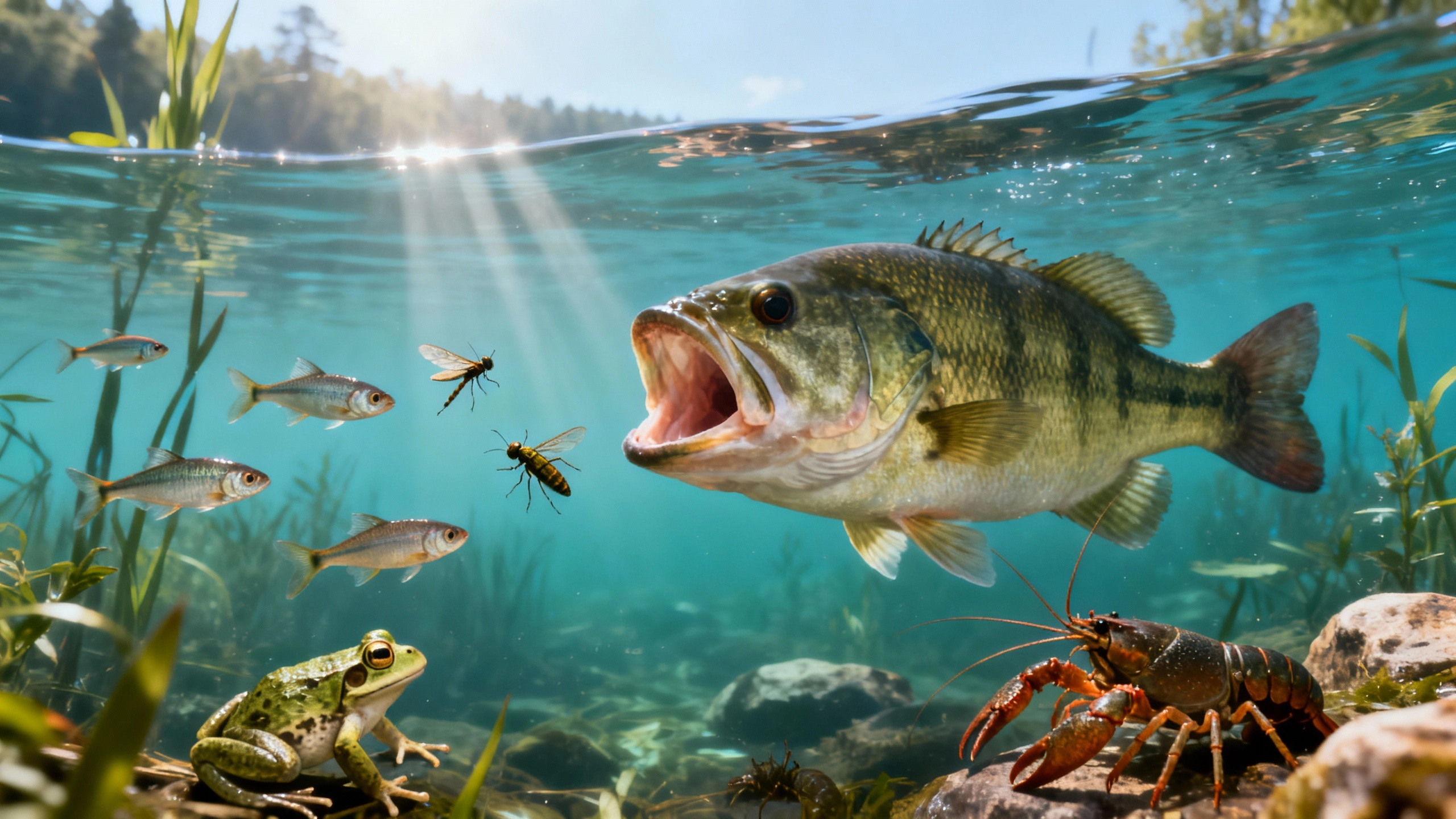
A Complete Guide to Their Natural Diet and Feeding Habits
Largemouth bass (Micropterus salmoides) are powerful freshwater predators known for their aggressive strikes and adaptable feeding behavior. Understanding what largemouth bass eat is essential for anglers, pond owners, and anyone interested in freshwater ecosystems.
This guide explains their diet at different life stages, how their environment affects feeding, and how to recognize feeding patterns—using clear examples, practical tips, and easy-to-follow sections.
Overview: Largemouth Bass Feeding Behavior
Largemouth bass are opportunistic carnivores. This means they eat whatever prey is most available and easy to catch. Their wide mouths allow them to consume surprisingly large prey compared to their body size.
Key traits of their feeding behavior include:
- Ambush-style hunting
- Preference for live, moving prey
- Feeding based on availability, season, and water temperature
- Strong reliance on sight and vibration detection
What Do Largemouth Bass Eat by Life Stage?
Just like pets and livestock, largemouth bass have different nutritional needs as they grow.
1. Largemouth Bass Fry (Newly Hatched)
In the earliest stage of life, bass fry feed on microscopic organisms.
Primary foods include:
- Zooplankton
- Tiny aquatic insects
- Micro-crustaceans
Visual cues:
- Fry often school tightly near shorelines
- They feed continuously throughout the day
2. Juvenile Largemouth Bass
As bass grow, their diet expands to include larger, more energy-rich prey.
Common food sources:
- Aquatic insects (mayflies, dragonfly larvae)
- Small crustaceans (copepods, amphipods)
- Tiny baitfish (minnows, shad fry)
Tip:
Juvenile bass often feed in shallow water with vegetation, where prey is abundant.
3. Adult Largemouth Bass
Adult bass are apex predators in many freshwater systems.
Their main diet includes:
- Smaller fish (bluegill, shad, perch, minnows)
- Crawfish (crayfish)
- Frogs and tadpoles
- Snakes and salamanders
- Small birds or mammals (occasionally)
Important note:
Bass typically target prey that is ⅓ to ½ their body length.
Seasonal Diet Changes in Largemouth Bass
Largemouth bass adjust their feeding habits throughout the year.
Spring
- Increased feeding due to spawning
- Focus on crawfish and baitfish
Summer
- High metabolism
- Aggressive feeding on fish, frogs, and insects
Fall
- Heavy feeding to build energy reserves
- Preference for schools of baitfish
Winter
- Slower metabolism
- Reduced feeding, targeting easy prey
Where Largemouth Bass Can Be Found or Live
Largemouth bass thrive in warm, freshwater environments with plenty of cover.
Typical habitats include:
- Lakes and reservoirs
- Ponds and farm dams
- Slow-moving rivers and streams
- Wetlands and marsh edges
Preferred environmental features:
- Aquatic vegetation
- Submerged logs and rocks
- Docks and fallen trees
- Shallow water near drop-offs
Visual cues of bass presence:
- Sudden baitfish movement
- Surface strikes near cover
- Circular ripples in calm water
How Largemouth Bass Hunt Their Prey
Bass are ambush predators, relying on stealth rather than speed.
Hunting techniques include:
- Hiding in vegetation or structure
- Striking suddenly from below
- Swallowing prey headfirst
They use:
- Excellent vision
- Sensitivity to water vibration (lateral line system)
Signs That Largemouth Bass Are Actively Feeding
Knowing when bass are feeding can improve fishing success and ecological observation.
Common feeding indicators:
- Surface splashes or boils
- Baitfish jumping or scattering
- Increased activity during dawn and dusk
- Birds feeding over water
Practical Tips for Anglers and Pond Owners
If you manage a pond or fish recreationally, understanding bass diet helps.
Helpful tips:
- Match bait or lures to natural prey
- Focus on structure-rich areas
- Adjust techniques based on season
- Maintain a healthy forage population in ponds
Frequently Asked Questions (FAQ)
1. Do largemouth bass eat other bass?
Yes, largemouth bass are cannibalistic, especially when food is scarce or size differences are significant.
2. Will largemouth bass eat dead bait?
They strongly prefer live prey but may strike dead bait if it appears natural and moves in the water.
3. How often do largemouth bass eat?
Adult bass may feed every 1–3 days, depending on water temperature, prey availability, and energy needs.
4. Do largemouth bass eat at night?
Yes, they can feed at night, especially in warm water, relying on vibration rather than sight.