

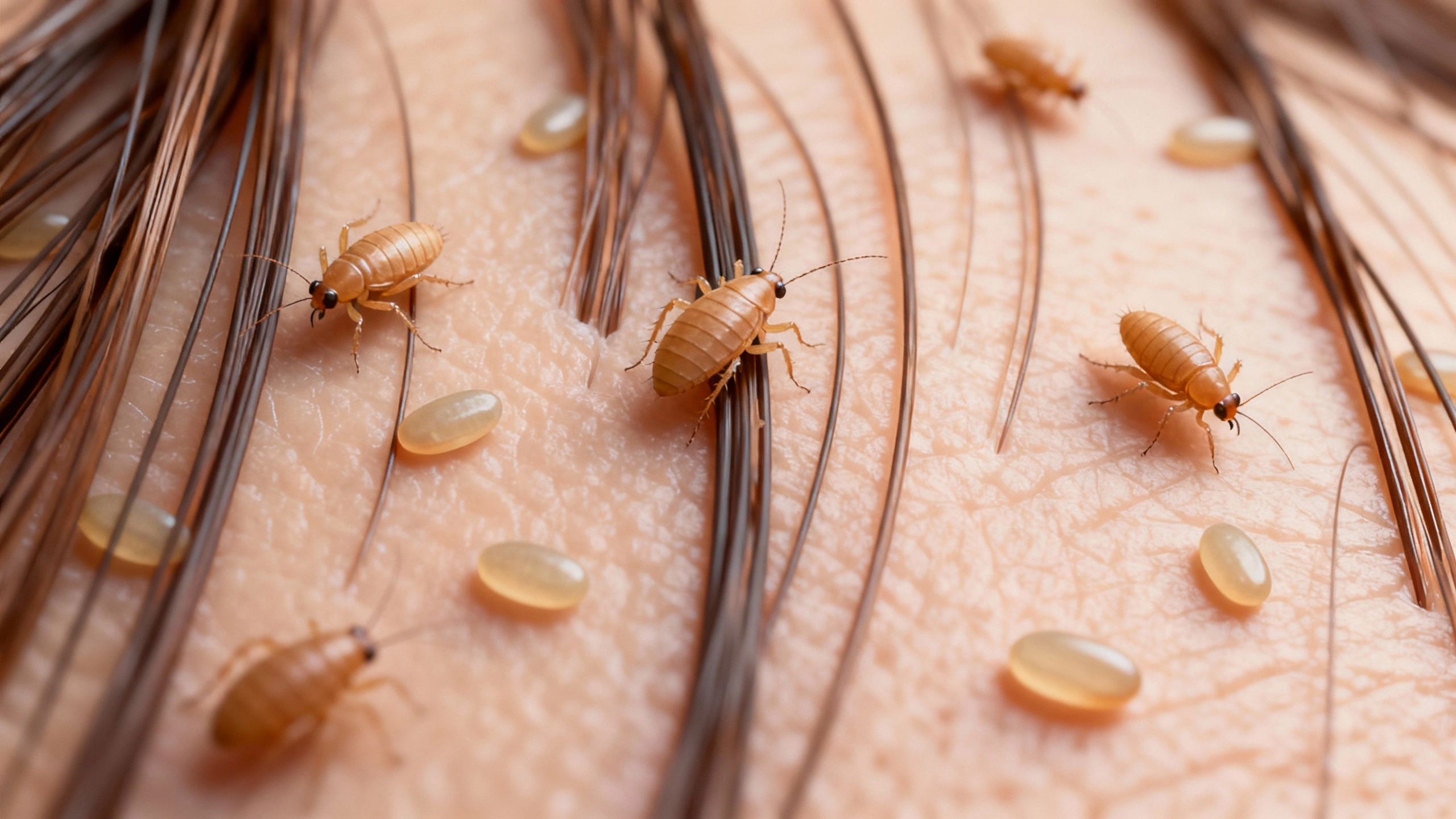
Lice infestations are common, especially among children, and can be both irritating and stressful. Knowing what lice look like in hair is the first step in identifying and effectively treating them. This guide will provide clear descriptions, visual cues, and practical advice for spotting lice and nits (lice eggs), as well as tips for managing infestations.
Understanding Lice
Lice are tiny parasitic insects that feed on human blood. They do not jump or fly but crawl quickly through hair. There are three main types affecting humans:
- Head lice: Live on the scalp and hair.
- Body lice: Live on clothing and move to the skin to feed.
- Pubic lice: Found in the genital area but sometimes in other coarse body hair.
For this guide, we focus mainly on head lice, the most common type.
What Lice Look Like
Adult Lice
- Size: About 2–4 mm long (roughly the size of a sesame seed).
- Color: Grayish-white, tan, or brown. Their color can darken after feeding.
- Shape: Flattened, oval bodies with six legs ending in claw-like structures to grip hair.
- Movement: Crawl quickly, often moving toward the scalp for warmth.
Nits (Lice Eggs)
- Size: Tiny, 0.8 mm, similar to a grain of sand.
- Color: White, yellow, or brown depending on age.
- Appearance: Oval-shaped and firmly attached to the hair shaft near the scalp.
- Distinguishing feature: Unlike dandruff, nits do not brush off easily.
Visual Cues in Hair
- Lice are easier to spot near the nape of the neck and behind the ears.
- Nits are often found within ¼ inch of the scalp.
- Adult lice may be seen moving, while nits remain fixed in place.
Symptoms of Lice Infestation
Identifying lice is not only visual; certain symptoms can indicate an infestation:
- Itching: Caused by an allergic reaction to lice bites.
- Red bumps or sores: Often on the scalp, neck, or behind the ears.
- Tickling sensation: Feeling something moving in the hair.
- Visible lice or nits: Often near the scalp.
Where Lice Can Be Found or Live
Head lice thrive in environments that allow them to feed and stay warm. Common places include:
- Human scalp: Close to the scalp for warmth and blood supply.
- Hair types: All hair types are susceptible, but thick or long hair may provide more hiding spots.
- Shared items: Brushes, combs, hats, and hair accessories can transfer lice.
- Close contact areas: Schools, playgrounds, or sleepovers where heads touch.
Lice cannot survive long off the human scalp—usually only 24–48 hours—so furniture or bedding is less likely to be a direct source.
How to Check for Lice
- Use a fine-toothed comb: Comb through wet hair section by section.
- Good lighting: Bright light or sunlight helps spotting tiny lice and nits.
- Check common areas first: Behind the ears and nape of the neck.
- Magnifying glass: Helpful for spotting nits close to the scalp.
Tips for Managing Lice
- Over-the-counter treatments: Permethrin or pyrethrin-based shampoos.
- Prescription treatments: For resistant lice, consult a doctor.
- Manual removal: Use a fine-toothed comb daily to remove lice and nits.
- Clean personal items: Wash bedding, hats, and hair accessories in hot water.
- Avoid sharing: Discourage sharing combs, hats, or headphones.
Preventing Lice
- Keep hair tied back or braided.
- Educate children about not sharing hats or hair accessories.
- Regularly check hair, especially after group activities.
FAQ
1. Can I see lice without a magnifying glass?
Yes, adult lice are visible to the naked eye, especially against dark hair. Nits are smaller and harder to see.
2. Can pets get head lice?
No, head lice are species-specific and only live on humans. Pets do not carry or transmit them.
3. How long do lice live without feeding?
Head lice usually die within 24–48 hours off the scalp. Nits can survive slightly longer but require warmth to hatch.